Resilience Ratings for Agriculture

Delivering repeatable, systematic information on the resilience of rural businesses to climate related hazards

Climate Resilience Ratings provide essential information needed to guide successful adaptation initiatives, providing a repeatable way of assessing the need and the outcomes of resilience programs

Get Started Today

Select a resilience rating score to find out more

A
B
C
D
E

Resilience Score: A

Farm is very resilient to the climate hazard identified.

Recommendation

Climate hazards are manageable within the existing range of technologies available to the farm. The farm is well equipped and has access to the necessary skills and finance to address foreseeable events.

Resilience Score: B

Farm is moderately resilient to the climate hazard identified.

Recommendation

The farm is facing the need for some incremental changes to decrease sensitivity or increase adaptability to climate hazards. Many of the incremental changes needed have been identified but there is scope for improvement and some financing and training may be required.

Resilience Score: C

Farm is equally resilient and vulnerable to the climate hazard identified.

Recommendation

The farm is facing the need for a wider range of incremental changes. Many of the changes needed, plus requirements for training and finance have yet to be identified

Resilience Score: D

Farm is moderately vulnerable to the climate hazard identified

Recommendation

The farm is facing significant challenges. Incremental changes to deal with adverse conditions may not be sufficient and a more fundamental pivot or change to the business may be required.

Resilience Score: E

Farm is very vulnerable to the climate hazard identified.

Recommendation

Climate hazards are proving to be unmanageable and the farm’s continued existence is under threat. The farm’s business is in urgent need of support to pivot or transition to a more resilient model.

Our methodology determines a farm’s exposure, sensitivity, adaptability and transformability to specified climate hazards.

Farms will be given a resilience rating from A to E as an indicator of the farms current level of resilience to the associated hazards, where:

A  = Very Resilient

E = Very Vulnerable

Navigating Climate Risks in Agriculture

Agricultural systems around the world are increasingly affected by climate related hazards, including:

  • Extreme Heat
  • Droughts
  • Flooding
  • Storms

These are sometimes felt as short-term events or longer periods of sub-optimal conditions. Farmers are often capable of adapting through a series of incremental changes but sometimes adaptation is insufficient and a transformation of the farming system is required.

Our ratings provide information on the need for adaptive or transformational finance.

How are resilience index scores calculated?

Our resilience index scores are based on the four components of resilience (exposure, sensitivity, adaptability, transformability) (as set out in the following equation:

How are Climate Resilience Ratings Delivered?

Our ratings are delivered for groups of farmers in specific locations / regions and crop or agricultural system types through a process involving the following steps.

1

Background Research

Background research into the situation and definition of the target groups
2

Configuration of Ratings Survey

Configuration of a rating survey based on our templates - customisation or preliminary testing, as required.
3

Data Collection

Data collection, which can include training and support of data collectors, if required
4

Production of resilience rating and resilience scores

Analysis and triangulation with climate projections, records and satellite data
5

Definition of adaptation measures

Identification of financial mechanisms to enable farmers to build their resilience
6

Annual Monitoring

Quantification of changes in resilience scores, including assessment of effectiveness of adaptation measures

Climate Resilience Rating
Reports

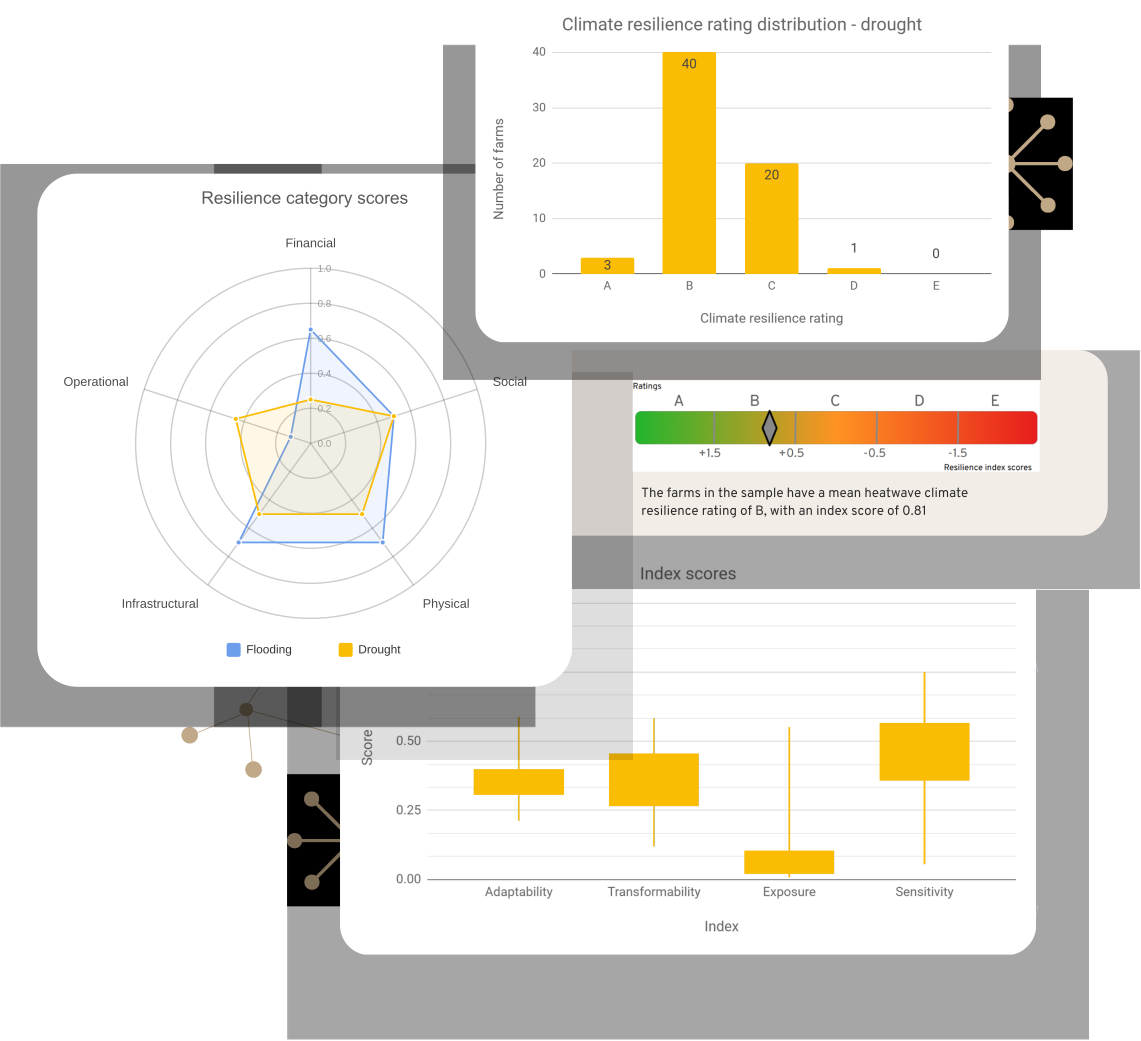
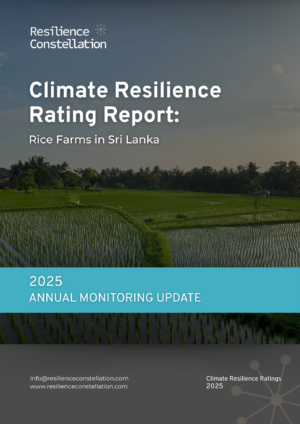
Climate resilience ratings provide a snapshot of the resilience among farmers of a particular crop. Our climate resilience rating reports serve to explain these ratings and provide a breakdown of resilience scores against various categories.

View Reports Library
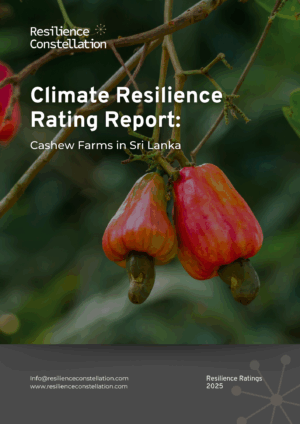
  • Climate Resilience Rating Report: Cashew Farms in Sri Lanka

  • Climate Resilience Rating Report: Coffee Farms in Chiapas, Mexico

Our ratings are relevant for the following types of organisations:

  • Farmers Organsations
  • Agricultural finance providers
  • National & International DFI’s
  • Government agencies
  • Buyers/processors of Agricultural products
  • NGO’s working on climate Adaptation

If you could benefit from a resilience ratings assessment tailored to the needs of your organisation, get in touch to discuss how we can support your resilience goals.

Frequently Asked Questions

Have further questions?

Contact us

What are the different stages involved in a Climate Resilience Ratings project?

Our ratings are delivered through a multi-step process as follows:

  1. Background Research into the situation and definition of the target groups.
  2. Configuration of a rating survey based on our templates – customisation or preliminary testing, as required.
  3. Data collection, which can include training and support of data collectors, if required.
  4. Data Analysis and triangulation with climate records and satellite information.
  5. Formation of a climate resilience rating report and feedback to farmers.

Contact us to discuss further details on how we can tailor our approach to the needs of  your organisation.

What is a Climate Resilience Rating?

A measure of climate resilience. The resilience rating ranges from A (high resilience/ low vulnerability) to E (low resilience/ high vulnerability). The resilience rating is derived from a resilience index score, which is a function of scores for four separate component indices for exposure, sensitivity, adaptability and transformability

How does Resilience Constellation ensure the success of their projects?

At Resilience Constellation we work closely with our clients throughout the entire project lifecycle to ensure that their objectives are met. Our approach can be tailored to meeting the specific needs of each organisation.

How do our Climate Resilience Ratings benefit the farmers involved?

Our aim is to share the results of our surveys with the farmers who have contributed. To do this we are developing a platform that will enable farmers to:

  1. Benchmark their performance against other farmers in the same country or region;
  2. Gain access to ideas from other farmers in the area and individuals with relevant expertise on how to increase their resilience.

The nature of the information we are able to share with farmers will depend to some extent on the requirements of our customers.

What is the difference between climate change adaptation and climate resilience?

While often used interchangeably, in this context, adaptation and resilience have distinct meanings:
Climate change adaptation: Refers to the process of adjusting to immediate or expected impacts of climate change.
Climate resilience: The capacity of systems (social, economic and environmental) to cope with climate hazards. It goes beyond adaptation and includes the ability to anticipate, withstand, recover, and learn to adapt to a changing climate.

What are the key regulatory and voluntary reporting requirements to support climate change and resilience in agriculture?

Key regulatory and voluntary reporting requirements and standards include the Sustainable Finance Disclosure Regulation (SFDR) in the EU, the International Financial Reporting Standards (IFRS) S1, the Task Force on Climate-related Financial Disclosures (TCFD), and Global Reporting Initiative standards (GRI).

Our Climate Resilience Rating Reports can provide you the insights needed to effectively meet these reporting requirements.